Stateful vs Stateless AI Agent Design Tradeoffs
State management matters more than the AI model choice itself.
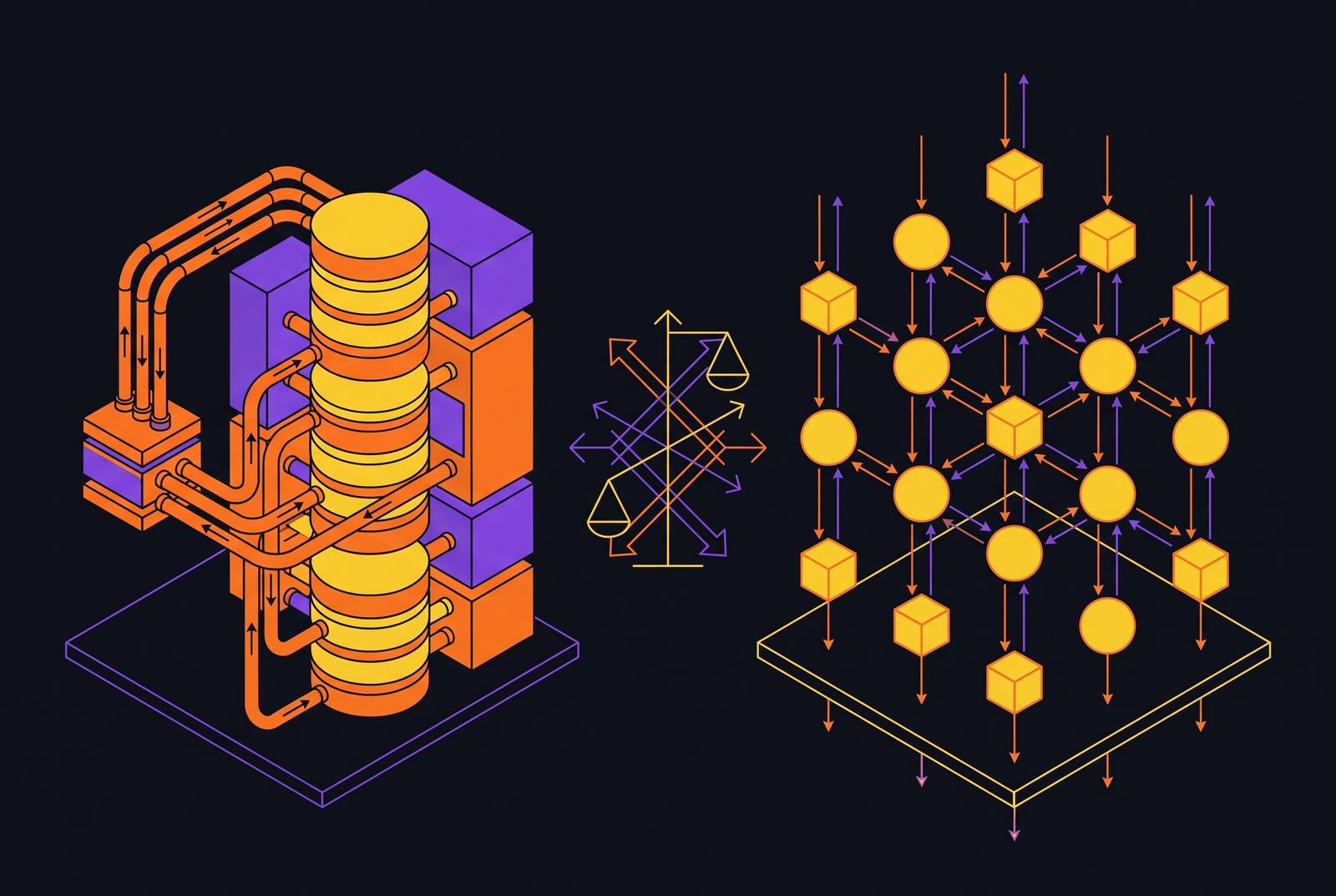
What looks like memory in a chat interface is context that the surrounding system gathers up and resends on every single call, not anything the model itself holds onto. The model has no file cabinet, no notebook, no persistent trace of the last exchange once the response finishes generating. So when a team debates whether to build a "stateful agent," they are usually debating how much runtime to build around a given model, not anything about the model itself. They are deciding how much of a runtime to build around it, who owns the job of reading prior context back in before the model answers, and who owns the job of writing new context back out once it does. Swapping GPT for Claude or Claude for Llama shifts the quality of individual reasoning steps, sometimes substantially, but whether the system remembers what happened an hour ago depends entirely on code that has nothing to do with the model weights. Statefulness is a property of the system wrapped around a frozen model, built by whoever wrote that surrounding code, never handed down by the model itself. The orchestration layer decides when to look backward and when to persist forward. The model just reasons, one step at a time, inside whatever window of context it's handed.
What the three paradigms describe
Three paradigms describe how that surrounding runtime can be built, and they are not three equally attractive options sitting on a shelf. Pure stateless design fits a narrow band of tasks, pure stateful design is rarely the right default primitive, and hybrid design is where most production systems actually converge.
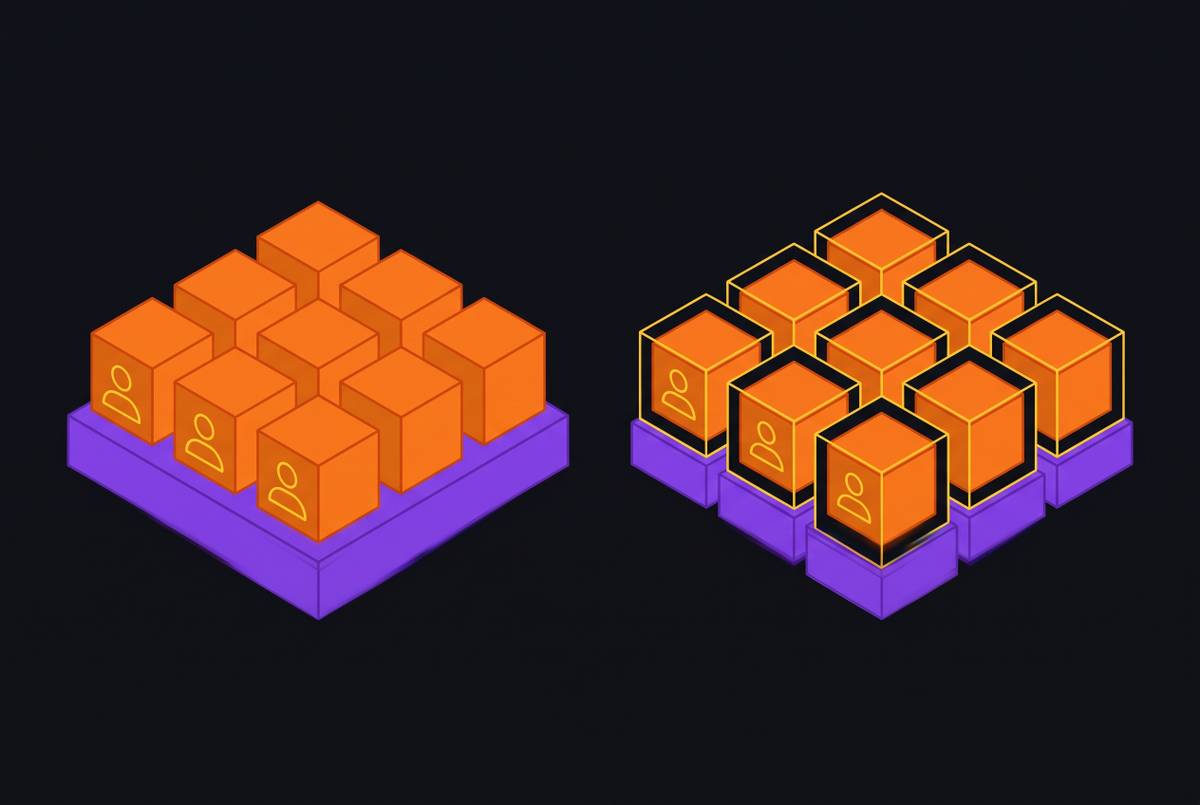
A stateless agent treats each request as a closed transaction. No lookup happens against a store, no write-back happens afterward, no session persists from one call to the next. The agent answers from whatever is in the prompt and forgets the instant the response is sent. This fits classification work, extraction tasks, single-turn question answering, and compliance checks where the absence of retained data is itself the point, not a limitation. It scales with plain load balancers, behaves predictably (the same input produces the same output), and sidesteps any question of consistency across requests, because there's nothing to keep consistent.
A stateful agent works differently: it loads prior state from a durable store before it responds and writes updated state back once it's done. The accumulated context shapes the response, not just the words in the current prompt. State here covers more ground than chat history alone: it includes conversation summaries, user preferences, workflow progress, tool results, and outcomes learned from earlier steps. This fits multi-step workflows, personalized assistants, coding agents that need to track a repository over the course of many hours, and anything expected to pick back up cleanly after a crash.
Hybrid design takes a different shape. A stateless LLM call sits inside a stateful runtime: the model reasons in isolation, call by call, while the orchestration layer around it owns session data, memory, and tool state on the model's behalf. Most production systems already work this way, often without anyone on the team deciding to build it that way on purpose. The tool-execution layer stays stateless and reproducible; the orchestration layer above it carries continuity. This is the architecture that shows up by default once a team builds anything beyond a single-turn demo, before asking where state inside that runtime should actually live.
Where state should live
State is not one object sitting in one database. It breaks cleanly into four tiers, each with its own store and its own lifecycle. Run or session state is scoped to a single task or conversation, keyed by a session ID, and discarded the moment the session ends. Conversation state holds the message history and intermediate reasoning that accumulate within a single interaction. User state carries preferences, past decisions, and account context that need to survive across many separate sessions. Long-term memory holds durable, accumulated knowledge, typically stored as embeddings and retrieved by similarity search rather than by exact key.
A piece of state that should vanish at the end of a session behaves very differently, in terms of cost, consistency, and correctness, than a piece of state meant to outlive hundreds of sessions. Treating them the same way, backed by the same database with the same eviction rules, produces quiet corruption that appears later under load.
Store selection should follow the tier. In-memory storage suits local testing. Redis suits low-latency session caching shared across instances. Durable databases or vector stores suit anything meant to outlive a single run. The payload itself also needs to stay small and cleanly serializable: state that can't serialize efficiently turns into a scaling bottleneck well before it ever turns into a correctness bug, because every read and write has to move that bulk across the network. What matters is which tier a given piece of state belongs to, since the tier fixes its lifecycle, its eviction policy, and how strict its consistency guarantees need to be.
The five failure modes that appear specifically when stateful agents run under real load
Stateful agents under real production load don't fail randomly. They fail in a short, recurring list of patterns, and every one of them traces back to a mismatch between where state actually lives and where the runtime expects to find it.
Localized amnesia is the first. Session history gets stranded on one server instance, and when a load balancer routes the next request to a different machine, the agent arrives with no memory of the turns that came before. It looks like a memory failure, but it's a routing failure, and the fix is centralized caching through something like Redis, or pinning a user's requests to a single instance.
Stale state from parallel writes is the second. Two concurrent agent threads update the same state object at the same time, the last write wins, and whatever the earlier thread contributed disappears without a trace.
Partial updates make up the third. A write-back fails partway through a multi-step sequence, and the agent is left holding state that reflects some of its recent steps but not all of them. It resumes from a baseline that's internally inconsistent, and nothing in the system necessarily flags that inconsistency before it causes a downstream error.
Race conditions form the fourth: multiple sub-agents or tool calls compete to read and write the same state key at once, and whichever one finishes last overwrites the others regardless of which result was actually correct.
Memory drift, sometimes called prompt drift, is the fifth. Across a long session, accumulated context grows stale or starts to contradict itself, and the agent's behavior shifts because the memory it's reasoning from no longer matches the current state of the task or the user's actual situation.
A practical guide from Tacnode names all five of these as the failure modes teams run into most often, and makes the point that none of them are exotic or surprising. They are predictable consequences of treating state as something to patch in after the fact rather than design up front. These five patterns appear only in stateful agents. They fail by forgetting, cleanly and visibly, every single time. Stateful failure tends to be quieter and more corrosive, because the system often keeps running on bad data without announcing that anything went wrong. Knowing this short list in advance, before a single production incident forces the discovery, is what turns stateful design from a gamble into something a team can actually plan around.
The performance gap between stateful and stateless designs
The performance gap between stateful and stateless agents isn't a flat, constant difference. It appears specifically at long task horizons, across repeated calls, and during failure recovery, which happens to be exactly where real production agent workloads spend most of their time.
Consider the Reflexion system from agent research. It let an agent write down, in plain language, what went wrong after a failed attempt, and then read that note back before trying again. That single mechanism moved performance on a coding benchmark substantially higher, without changing a single weight in the underlying model. The entire gain came from the runtime's ability to persist a record of failure and feed it back in on the next attempt. No architecture change to the model produced that improvement. A place to write something down, and a reliable way to read it back later, produced it.
Token cost tells a related story. When a prompt has a stable prefix, system instructions, tool definitions, the early turns of a conversation, caching that prefix across calls cuts both the time to first token and the per-call token cost. A stateless design that resends the full context on every single call gives up that advantage entirely, trading a simpler infrastructure setup for a higher ongoing token bill. It's a direct structural consequence of how context gets managed, not a marketing claim about any particular vendor's product: reuse what hasn't changed, and the cost of reusing it drops; resend everything every time, and the cost scales linearly with how much context has piled up.
Error recovery follows the same logic. A stateful agent can log what it tried, detect that the attempt failed, and route around it on the next try. A stateless agent carries no record that it ever tried in the first place, so it simply fails again.
None of this means stateless agents are at a disadvantage everywhere. Taken call by call, a stateless design is faster and cheaper, because it carries no state to load, check, or write back. The cost advantage of statefulness only becomes visible at the level of the whole task, once the fewer round trips needed to finish a multi-step job are counted against the per-call savings of staying stateless.
How the execution substrate shapes stateful architecture
The infrastructure underneath has to actually support the tradeoffs argued above, or none of them matter. Stateful agents need isolated environments where they can install packages, hold credentials, maintain live browser sessions, and build up filesystem state over time, and shared containers or serverless functions were never built with that threat model in mind.
Firecracker micro-VMs have become the dominant isolation primitive for agent workloads for this reason. Each sandbox boots its own dedicated Linux kernel, with hardware-level isolation that would require an attacker to escape both the guest kernel and the hypervisor to reach anything else. Firecracker supports only five device types, compared with the hundreds supported by QEMU, which cuts the attack surface down sharply by removing most of the code that would otherwise need to be trusted. In practice, a micro-VM boots in approximately 125 milliseconds and carries less than 5 MiB of overhead per VM. It also supports VFIO device passthrough, which gives a sandboxed agent real GPU access, something gVisor's user-space kernel blocks at the PCIe and VFIO level, though gVisor does support NVIDIA GPU access through its own nvproxy ioctl-forwarding driver.
Snapshot-restore is the mechanism that turns this isolation layer into something economically workable for stateful agents specifically. A sandbox can be paused, its memory and filesystem state preserved, and then resumed in somewhere between 5 and 30 milliseconds. That's the operational foundation for any agent harness where context builds up across dozens of tool calls over a long session. One concrete implementation, from PandaStack, restores a baked Firecracker snapshot on every create call, one that already contains a booted kernel, a running guest agent, and an initialized network stack, so starting a sandbox means mapping memory and resuming rather than booting from zero, landing at roughly 179 milliseconds p50. Only the first cold boot of a brand-new template takes meaningfully longer, because that's the point where the snapshot itself gets baked; everything that runs afterward takes the fast restore path.
The tooling built around this pattern now exists concretely rather than theoretically. SmolVM, published April 21, 2026 under an Apache 2.0 license by Aniket Maurya and the Celesto AI team, wraps Firecracker on Linux and QEMU (along with libkrun) on macOS behind a Python interface that takes about three lines of code to use. It exists specifically to address a gap that Docker containers and plain Python subprocess calls leave open: neither was designed with untrusted, LLM-generated code as the thing they need to contain. Microsoft's Agent Framework, which reached general availability in April 2026 and was featured at BUILD 2026, built scale-to-zero directly into its Foundry Hosted Agents, announced at the same event: agents cost nothing while sitting idle, scale back up on the next incoming request, and keep their files, disk state, and session identity intact across that entire idle period. That same suspend-and-resume pattern is also what makes human-in-the-loop checkpoints practical: the agent can wait on a person indefinitely, cost nothing during the wait, and come back with its full context intact the moment that person responds.
How idle-cost economics change the build-vs-scale calculation
A persistent agent fleet only makes financial sense if the billing model charges for storage rather than for idle compute sitting unused. Without that distinction, a stateful architecture that looks affordable at the scale of a demo turns prohibitively expensive the moment it's running thousands of concurrent user sessions. Most of an agent's lifetime is spent waiting on the user to respond, and the economic goal is to pay only for compute while it's actually doing parallel work, while still keeping as many separate agent identities alive as the product needs.
Snapshot-restore is what makes that possible in practice: snapshot the agent's state, release the compute it was occupying, and restore it the moment the user comes back, with the agent's state intact the whole time and the operator's margin intact along with it.
Pricing itself hasn't settled into one stable model yet, even among vendors with a lot of deployment experience. Salesforce shipped three distinct pricing models for Agentforce in roughly eighteen months: per-conversation pricing at launch, Flex Credits billed per action starting in May 2025, and per-user licensing by late 2025, with all three still running at the same time. That churn says something real about how unsettled this market still is, even among vendors that have been at it the longest. Hybrid pricing, a subscription layered with usage-based charges, has become the pattern most vendors seem to be converging on, since it gives buyers some predictability while still letting the vendor's costs track actual usage. Outcome-based pricing keeps getting proposed as the ideal, but it stays rare in practice, because defining an outcome cleanly, measuring it reliably, and attributing it to a specific agent action is a hard problem that most billing systems were never built to solve.
The infrastructure math, unlike the pricing, is a little more settled. A 2026 survey of agent sandbox providers found slot prices converging around a common level, with snapshotting standing out as the only mechanism that meaningfully cuts the cost of idle time. That number decides whether a given team builds its own stateful agent infrastructure or buys it from a vendor that has already solved idle costs at scale.