Firecracker Micro-VM Architecture for AI Agent Workloads
Firecracker gives AI agents isolated kernels without sacrificing speed or cost.
Firecracker's minimal VMM design maps almost precisely onto what production AI agent workloads demand. Hardware-enforced kernel isolation contains untrusted, model-generated code at the boundary where it actually executes, while sub-125ms boot and snapshot-restore wake times keep that isolation on the hot path without collapsing the user experience. The result is an architecture where per-agent virtual machines become economically viable, not merely technically defensible.
Why the standard container model breaks down for AI agent workloads
An AI agent executing LLM-generated code is, by definition, running untrusted input. The model is a probabilistic generator, not a verified authority, so any code it produces must be treated as potentially hostile regardless of how innocent the prompt appeared. This inverts the trust assumption that most production infrastructure was built around.
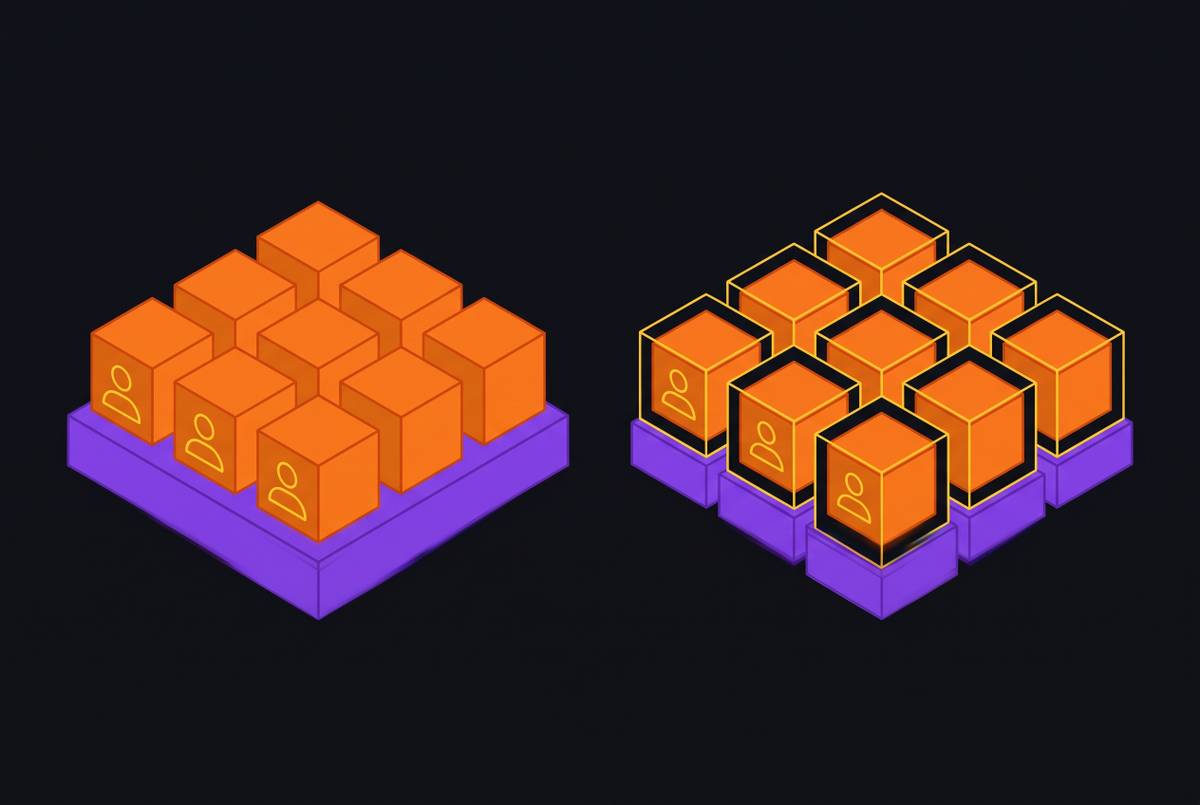
The shared-kernel model of Linux containers rests on the premise that the code running inside them is essentially trustworthy, written by developers who work for the same organization and subject to the same review processes. A container is a Linux process wrapped in namespaces and cgroups. It shares the host kernel's entire system call surface, memory manager, and scheduler with every other container on the machine. When that assumption holds, the model works. When untrusted code runs inside instead, a kernel exploit or privilege-escalation path becomes a full host compromise, not a contained incident. Firecracker's design documentation frames the core challenge as enabling workloads from different customers to run on the same machine without tradeoffs to security or efficiency, a goal containers structurally cannot meet.
Agent behavior worsens this threat model compared to ordinary application code. Agents autonomously install packages, fork subprocesses, manipulate file descriptors, and run browser automation. These behaviors probe the kernel attack surface in ways a static application deployed from a reviewed release pipeline never would. An agent that decides to install a package from PyPI because its model thought that would help solve a problem is exercising capabilities that a typical containerized web service simply never touches.
The standard objection is that containers have seccomp, AppArmor, user namespaces, and capability restrictions. These layered hardening mechanisms do not change the underlying architecture. All those containers still call into the same kernel, and a vulnerability in that kernel bypasses every user-space control layered above it. The hardening is real and valuable for reducing the attack surface of a well-behaved workload. It is not, however, an isolation boundary in any meaningful sense when the code being executed is adversarially capable.
What Firecracker is and the deliberate design choices that make it different from QEMU
Firecracker is a minimal virtual machine monitor that runs in user space and uses Linux KVM to give each workload its own dedicated kernel. It achieves this without carrying the decades of legacy device emulation that make QEMU general-purpose and therefore large. The design is deliberately narrow: enough virtual hardware to run a Linux guest efficiently, and nothing more.
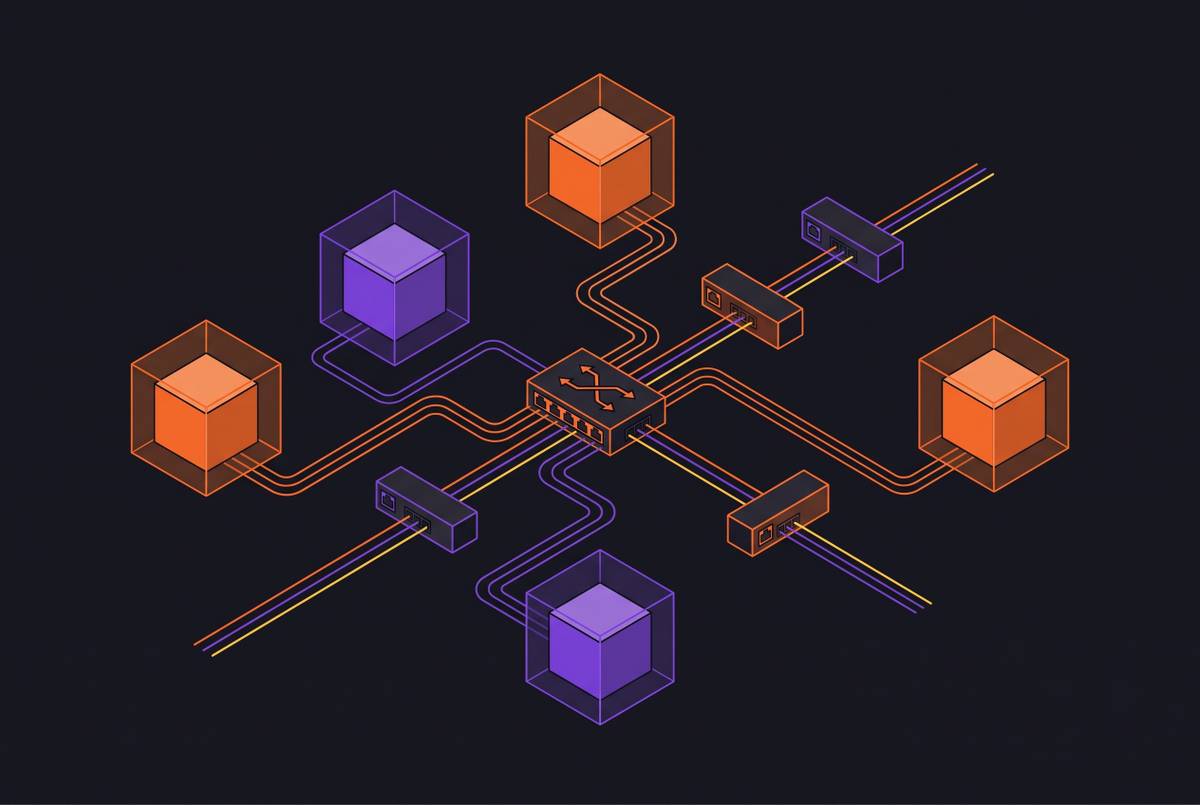
Each microVM runs as its own Firecracker process rather than a single daemon managing all VMs. A compromise of one VMM process is therefore contained within that process and cannot directly affect sibling VMs or the host. The jailer companion program adds a second isolation layer, so even if the virtualization barrier is breached, common Linux user-space security controls form a second line of defense.
Control is exposed through a RESTful API that allows configuring vCPUs, memory, rate limiters for network and storage bandwidth, and a metadata service for secure host-to-guest configuration sharing. The API surface is precisely the set of operational primitives an agent platform needs. Firecracker supports 64-bit Intel, AMD, and Arm CPUs with hardware virtualization, making it deployable on standard bare-metal cloud infrastructure without special accommodation.
How hardware-enforced kernel isolation maps onto the agent sandboxing requirement
Because each Firecracker microVM runs its own kernel atop hardware virtualization, a kernel exploit inside one agent's VM cannot reach the host or any other VM. The transistor-level boundary does not care how clever the escape attempt is. Whatever the guest kernel does, it operates on memory that is mapped to that guest's address space, and the hardware enforces the separation.
This property is precisely what the agent sandboxing requirement demands. Agents that install packages from PyPI, run shell commands, or execute model-generated scripts must be contained such that their worst-case behavior stays inside their own kernel. When an agent autonomously executes model-generated code, that untrusted workload runs against its own kernel, not the shared host kernel, so a compromise stays confined to that single agent.
The industry is moving toward this posture, but unevenly. Kiro, the AWS agentic coding tool, uses managed sandboxes for its Kiro Web cloud surface, while its primary IDE and CLI do not sandbox agent execution by default and instead inherit the developer's own permissions. That distinction signals where the security floor is heading: interactive surfaces get isolation first, while local tooling lags behind.
The objection that hypervisor escapes are also possible is real but changes the risk calculus rather than invalidating it. Hypervisor escape vulnerabilities are rarer, harder to exploit, and more quickly patched than kernel-level container escapes. The relevant comparison is attack surface: thousands of lines of Firecracker VMM code versus tens of millions of lines in the Linux kernel. That is not theoretical equivalence dressed up as a preference. It is an order-of-magnitude reduction in the code an attacker can target.
Why sub-125ms boot and snapshot-restore wake times matter for responsive agent products
The reason teams historically skipped sandboxing on hot paths was latency. If spinning up an isolated environment takes seconds, the user experience of a real-time coding agent or interactive workflow collapses, and teams quietly dropped isolation where it mattered most. The tradeoff was framed as security versus responsiveness, and responsiveness won because the product could not ship otherwise.
Firecracker changes that calculation by booting a full dedicated kernel in less than 125 milliseconds, with memory overhead under 5MB per microVM. Those numbers make per-invocation isolation viable rather than a luxury reserved for batch workloads that run overnight and answer to nobody's deadline. Rather than cold-booting on every agent wakeup, a snapshot of the idle guest's memory and filesystem is restored from disk, landing the agent back in its running state in tens of milliseconds rather than hundreds.
The architectural insight is that snapshot creation happens on the cold path, when the agent goes idle anyway, while restoration happens on the hot path, when a user is waiting. The slow operation is therefore invisible and the fast one is what the user actually experiences. Copy-on-write means the restore pays, in time and memory, only for the working set the guest actually touches, not its declared size.
How memory overhead and density numbers make per-agent VM deployment economically viable
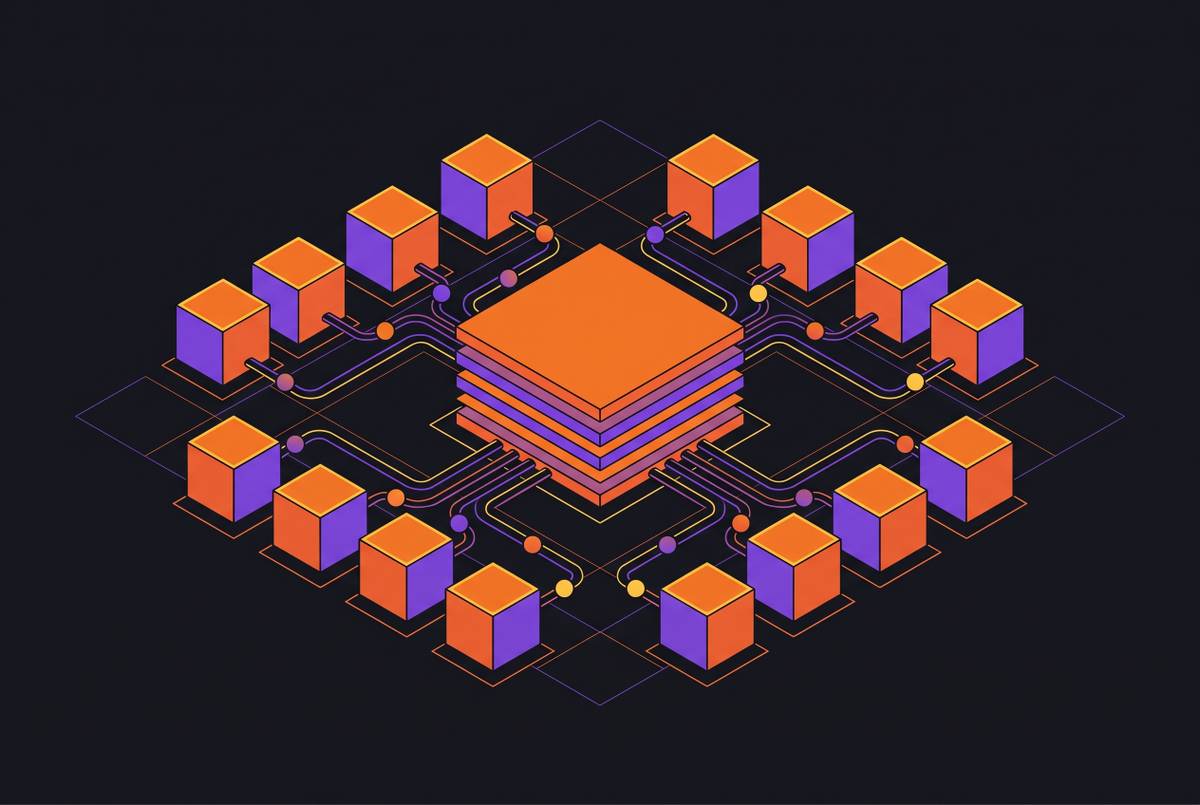
The fundamental economic challenge of per-agent VM deployment is density. If each VM consumes hundreds of megabytes of overhead regardless of workload size, the number of agents that can run on a host is too low to make per-agent cost competitive with shared-kernel alternatives. Firecracker's design explicitly enables packing thousands of microVMs onto the same machine. Each additional VM's cost is dominated by the workload's actual memory use, not by a large fixed VMM tax.
Memory oversubscription multiplies density further. Because Firecracker only allocates physical RAM for pages the guest actually touches, a host can be configured with more total declared VM memory than physical RAM, letting agents running light workloads coexist with agents running heavier ones on the same hardware. If every microVM spikes simultaneously, the Linux OOM killer intervenes, so operators must set oversubscription ratios that match observed workload variance rather than worst-case peaks.
Firecracker also supports memory hotplugging, which matters when an agent's memory footprint varies across a session. An agent processing a large document needs significantly more RAM than the same agent answering a simple query. Hotplugging lets the VM grow on demand and shrink afterward, so operators pay for the peak only during the peak window.
The snapshot-restore idle scheduler ties the economic argument together. Maritime's architecture is built directly on this insight. Its snapshot-and-restore scheduler lets idle agents pay for storage rather than CPU, so a flat per-agent-per-month rate is achievable even when each agent has its own dedicated microVM.
The one-session-one-microVM pattern and what it enables for multi-tenant agent fleets
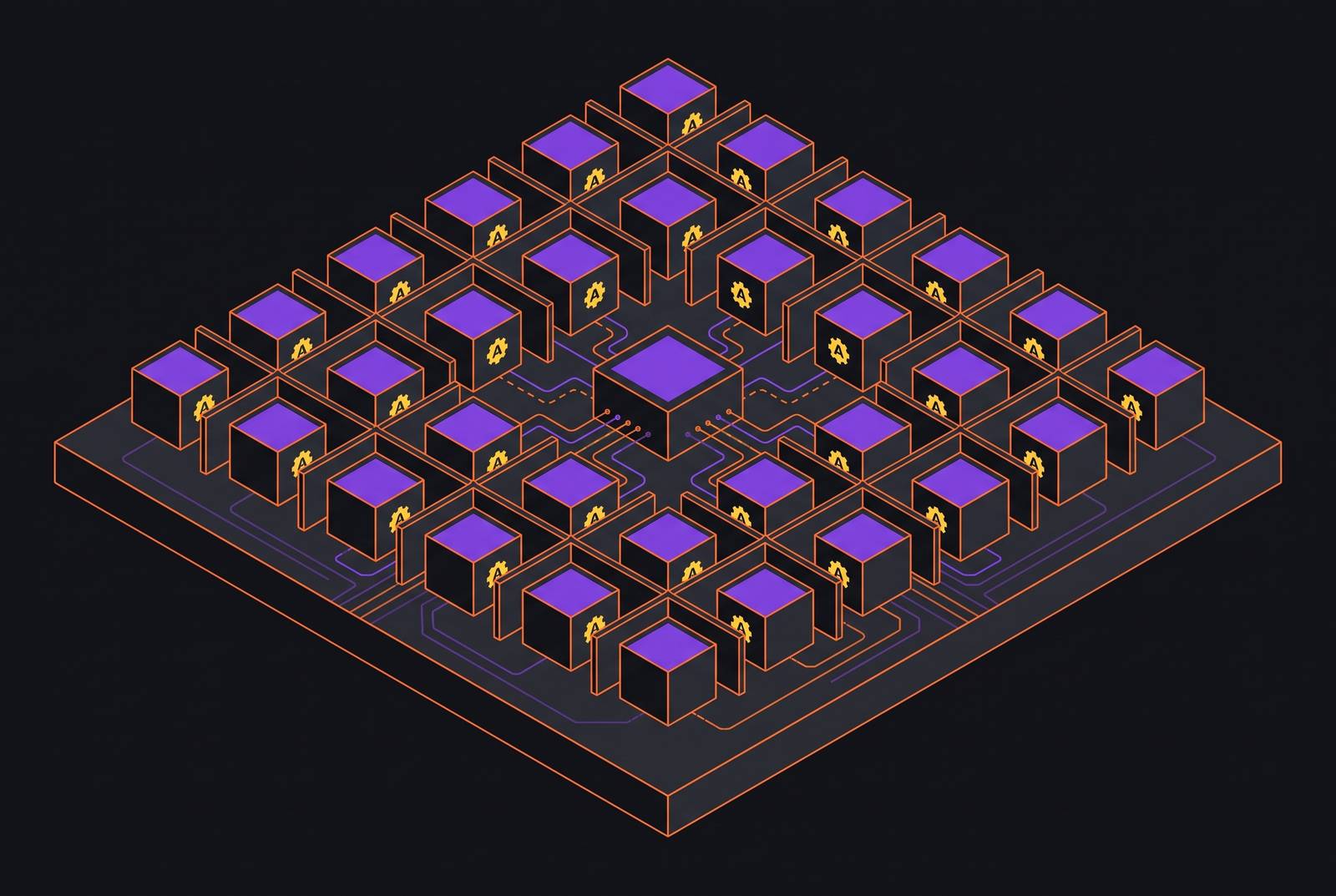
The canonical production pattern for agent platforms is one session equals one microVM. Each user's agent gets a dedicated, isolated VM whose lifecycle tracks the user's session, rather than sharing a pool of containers that get reconfigured between tenants. The isolation guarantee is structural, not dependent on correct application-layer access controls.
Firecracker's built-in rate limiters extend this isolation to resource consumption. Network and storage bandwidth can be controlled per microVM, so one tenant's agent cannot saturate resources at the expense of others. Agents can install packages, run shell commands, and execute model-generated scripts with the confidence that the worst-case escape stays inside that agent's VM.
Firecracker's horizontal auto-scaling properties match the demand curve of agent fleets, which spike sharply at peak and trough deeply at off-peak. Each agent in a Maritime fleet gets a persistent disk, installed packages, logins, and memory that survive sleep, restart, and redeploy. The per-user agent model that architecture supports is exactly the one-session-one-microVM pattern that Firecracker's density numbers make financially viable.
What "persistent state" requires from the underlying VM infrastructure
A persistent agent is not a request handler that returns a response and disappears. It is a process with a disk, a set of credentials, a package environment, and a memory of past interactions that must survive sleep, redeploy, and host migration. Stateless serverless runtimes are structurally incapable of meeting this contract. Every invocation starts cold, and that is precisely what a persistent agent cannot afford.
Firecracker's snapshot mechanism is the infrastructure primitive a persistent agent needs. The full VM state, including memory pages, vCPU register state, virtio device state, and in-guest process and file-descriptor state, is written to disk when the agent sleeps and restored atomically when it wakes. The snapshot itself is not a workaround. It is the correct primitive for the Human-in-the-Loop pattern, where an agent must pause, wait for external input for an indeterminate time, and resume exactly where it left off without resource cost during the wait.
Persistent disk access requires a real block device attached to a real VM. The ability to install packages, write files, maintain a browser profile, and store credentials cannot be layered onto an ephemeral container layer that disappears on restart. A persistent agent needs the same kind of filesystem permanence a workstation provides, because its usefulness accumulates in what it has installed, configured, and remembered.
Where Firecracker fits in the broader isolation spectrum and which workloads it is actually right for
Firecracker is not the right tool for every workload. It is the right tool for workloads where the code being executed is untrusted, the tenant isolation requirement is hard, and the density-at-scale economics need to work simultaneously. Shared-kernel containers remain correct for trusted, internally written code in controlled environments. CI/CD pipelines, build steps, and internal microservices running reviewed code are exactly the workloads containers were designed for, and they remain well-served by that model. User-space kernels such as gVisor occupy the middle of the spectrum. They are stronger than containers because syscalls are intercepted by a user-space application rather than passing directly through to the real kernel. They are weaker than microVMs because the boundary is still software, not hardware. They suit low-to-medium trust workloads and Kubernetes-native environments where VM overhead is impractical.
MicroVMs like Firecracker sit at the top of the isolation spectrum. Each VM has its own kernel, and a kernel exploit is contained within that VM. This is the current standard for untrusted code execution at scale, and it is the correct choice for agent workloads executing LLM-generated code, user-uploaded scripts, or any code where the instruction source is attacker-influenceable.
The decision axis for practitioners reduces to a single question: how untrusted is the code the agent runs? For user-supplied or autonomously generated code in a multi-tenant environment, Firecracker-class hardware isolation is the appropriate boundary. Production guidance for agent workloads is to use Kata Containers or Firecracker for executing untrusted AI-generated code, and to use gVisor when Kubernetes compatibility is required with stronger-than-container isolation.
How to evaluate a Firecracker-based agent infrastructure platform in practice
A developer choosing an infrastructure layer for persistent AI agents should evaluate against the specific properties Firecracker's architecture provides, not generic cloud compute criteria. The checklist begins with the isolation boundary. Does each agent session get its own kernel on hardware virtualization, or is isolation container-level? That single question determines whether a kernel exploit in one tenant's session can reach another tenant's data.
The second criterion is persistent disk and state. Does each agent get a real block device that survives sleep and redeploy? Can it install packages, maintain credentials, and preserve browser state across sessions? If the answer is no, the platform is offering something closer to a stateless function runner, regardless of how it is marketed. Does the pricing model charge for storage during idle periods, or does it keep a compute meter running for every parked agent? This determines whether per-agent deployment is economically sustainable at scale.
The fourth is density and multi-tenancy. Can the platform support many concurrent agent sessions on shared hardware with resource isolation per tenant, including rate limiters that prevent one tenant from saturating shared bandwidth? The fifth is developer ergonomics. Maritime is built directly on this architecture: Firecracker microVMs on bare metal, one VM per agent, persistent disk, snapshot-restore scheduling so idle agents cost storage rather than compute, wake times of about a second, and a flat per-agent rate. Its CLI and SDK abstract the VMM layer so developers deploy agents rather than infrastructure, which is the standard a platform should be measured against.